
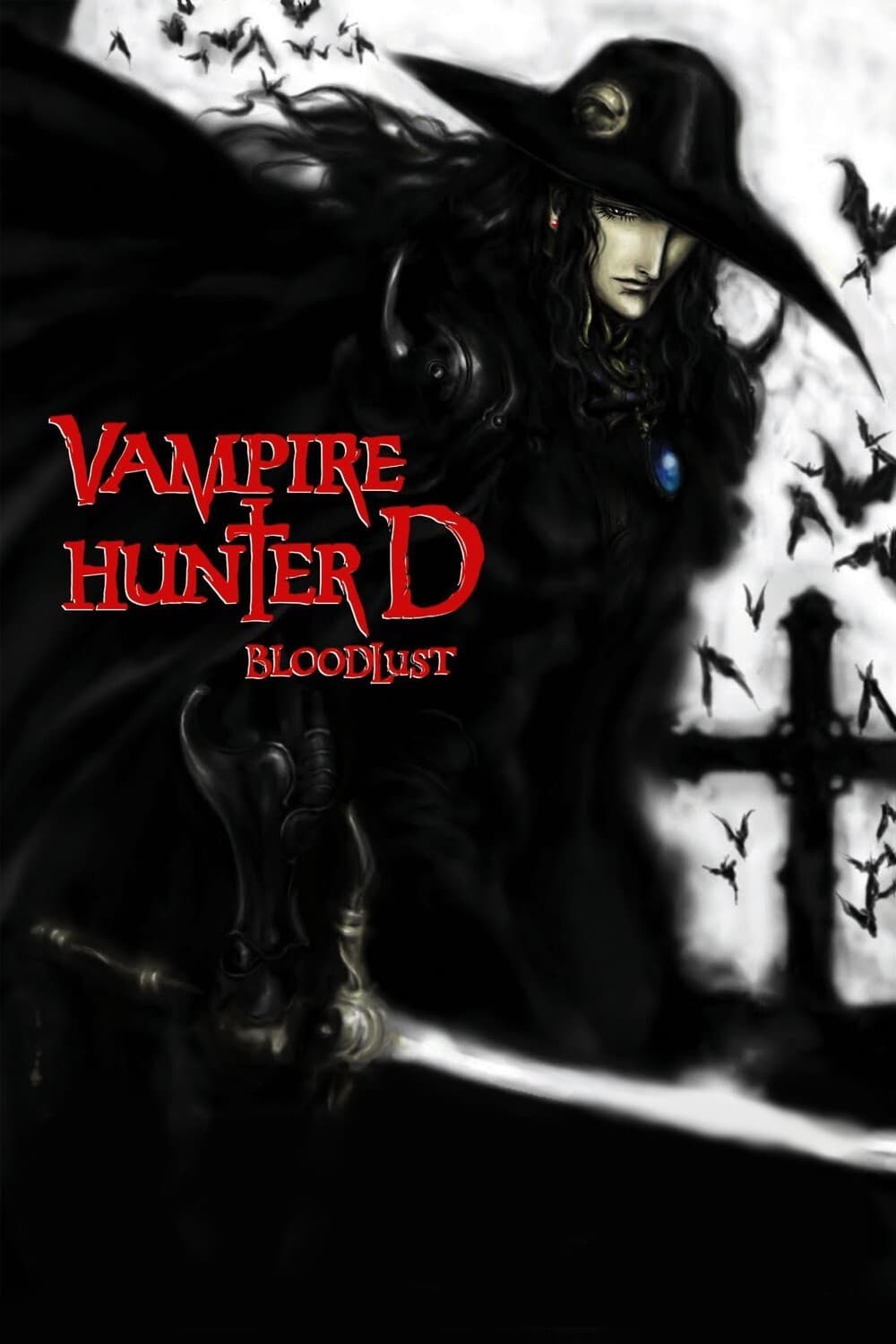
If you ask old-school fans why Vampire Hunter D still lives rent-free in their heads, they won’t give you a thesis. They’ll tell you about a feeling: the way the wind seems to stop when D puts a hand on the sword, the way the frame holds its breath before everything is decided in a single motion. In a sea of loud heroes, D whispers—and somehow that hits harder.
Bloodlust vs 1985 — Two Eras, Two Emotions
The 1985 film feels like a frontier nightmare—dust, superstition, and monsters that wear old nobility like perfume. Bloodlust (2000) moves like a dream painted in silver and blood. Every shot feels hand-etched, every pause deliberate. The older movie screams survival; Bloodlust mourns beauty lost in time. Same hunter, same sword—different kind of loneliness.
Why D’s Silence Hits Harder Than Any Sword Swing
D doesn’t talk much because he doesn’t need to. His silence isn’t cold—it’s protective. He’s a half-breed who never fully belongs, and every town he saves reminds him of that. When he draws the blade, it’s not for glory. It’s mercy, duty, and maybe a whisper of regret. You can feel it in his eyes before you ever see the strike.

The World of Blood and Circuits
The universe of Vampire Hunter D is one of the most beautiful contradictions ever drawn—science and sorcery sharing the same coffin. Cathedrals hum with machinery, castles breathe, and time feels tired. It’s gothic, yes, but also strangely alive. It’s the kind of world where beauty decays gracefully, like stained glass after centuries of sunlight.
The Power That Doesn’t Need to Prove Itself
D could level armies, but the movies rarely show him flex. That’s what makes him different. The tension isn’t “can he win?”—it’s “what will he choose?” His Left Hand mocks, warns, and saves him, all while acting like the audience stand-in: the one voice that refuses to let the silence swallow everything. True fans know—the Left Hand is what keeps D human.

How the Statue Captures That Stillness
The Vampire Hunter D statue works best when it’s still. The good ones never show him fighting—they show him deciding. The cloak looks like wind sculpted in resin, the sword almost too heavy to lift. That calm is the story. Collectors love that. It’s not just a character; it’s a philosophy molded in shadow and light.

The Sacred Ancestor and the Weight of Legacy
Even without saying his name, the shadow of D’s father—the Sacred Ancestor—hangs over every frame. Science disguised as divinity, creation wrapped in arrogance. D is the contradiction he left behind: proof that being born of darkness doesn’t mean you have to live in it. That’s the thread that ties every adaptation together—the idea that willpower matters more than bloodline.
If You Loved D, Try These Next
For anime fans who crave that same balance of beauty and brutality: Castlevania (Netflix) perfects the gothic tempo. Claymore mirrors D’s loneliness with blades and ghosts. Devilman screams what D whispers. Hellsing Ultimate turns chaos into poetry. Each one scratches the same itch—tragic heroes who fight for reasons quieter than vengeance.
In Short (For the Collectors Who Understand Quiet Power)
Vampire Hunter D: Bloodlust isn’t about spectacle. It’s about patience. About knowing you can win but choosing not to destroy more than you must. That’s why, decades later, collectors still chase his statues. They aren’t just figures—they’re moments of silence captured in sculpted motion.

Where to Find These Statues
If you want to bring that same feeling to your shelf, these are the ones that carry D’s legacy in resin and shadow:
Vampire Hunter D Statue → Elfen Lied – Lucy Elite Solo → Devilman – Sirene Elite Exclusive → Hellsing – Seras Victoria Elite Exclusive → Claymore – Clare vs Ophelia →